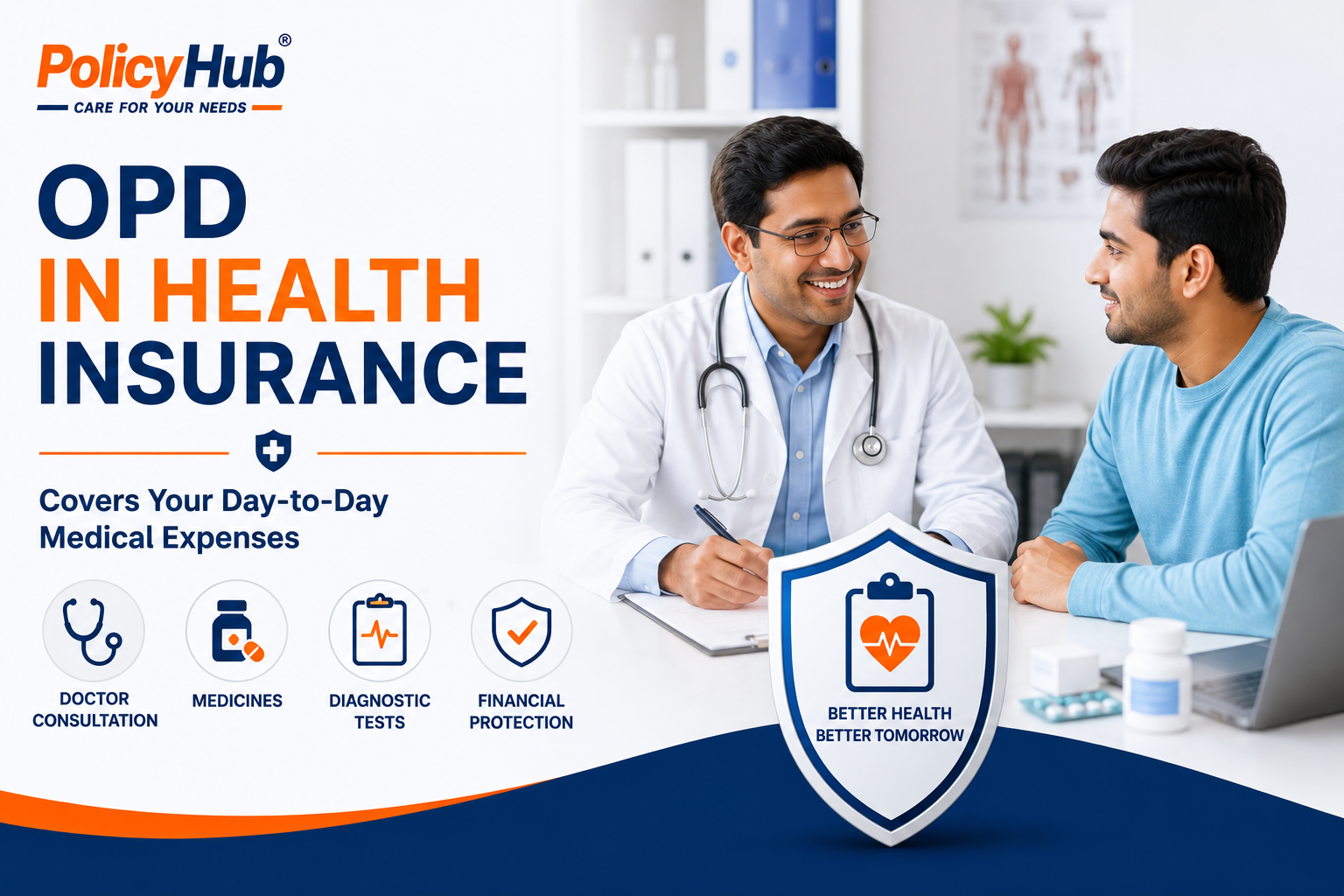
Healthcare expenses today go far beyond hospitalizations and emergency treatments. Regular doctor consultations, diagnostic tests, prescribed medicines, and routine health check-ups account for a major portion of medical spending, especially for families, working professionals, and senior citizens managing ongoing health needs. This is where OPD in health insurance becomes highly relevant. OPD coverage in health insurance helps cover day-to-day medical expenses that are usually paid from pocket, such as outpatient consultations, lab tests, and medicines. By including OPD benefits, a health insurance policy ensures timely access to medical care, encourages preventive treatment, and reduces the financial burden of frequent healthcare costs. As awareness grows, OPD coverage is increasingly seen as an essential feature for comprehensive health insurance and improved long-term healthcare planning in India.
What Is OPD in Health Insurance?
OPD in health insurance refers to coverage for medical expenses that do not require hospitalization. OPD (Outpatient Department) treatments include doctor consultations, medical tests, medicines, and minor procedures where the patient is not admitted to the hospital for 24 hours.
Unlike traditional health insurance plans that focus mainly on hospitalization, OPD benefits cover routine healthcare costs.
Why OPD Coverage Is Important in Health Insurance
Most medical expenses happen outside hospitals. Regular doctor visits, follow-ups, and diagnostics can add up over time. OPD coverage ensures that these frequent but smaller expenses are also financially protected.
With OPD benefits, individuals are more likely to seek early medical attention, which helps prevent serious health conditions and reduces long-term treatment costs.
What Does OPD in Health Insurance Cover?
OPD coverage may vary depending on the insurer and plan, but it generally includes:
Some advanced health insurance plans also offer digital OPD services like online consultations.
How OPD Coverage Works in Health Insurance?
OPD benefits usually come with a predefined annual limit. Claims can be settled through reimbursement or via digital cashless platforms offered by insurers. Unlike hospitalization claims, OPD claims are simpler and quicker.
Policyholders must retain medical bills and prescriptions to claim OPD expenses under reimbursement-based plans.
OPD Coverage vs Hospitalization Coverage
While hospitalization coverage protects against major medical emergencies, OPD coverage focuses on everyday healthcare needs. Both are important, but OPD benefits add value by covering frequent medical expenses that are otherwise paid from pocket.
Having both ensures comprehensive health protection.
Who Should Opt for OPD in Health Insurance?
OPD coverage is especially beneficial for:
It is also useful for those who prefer preventive healthcare.
Things to Check Before Buying OPD Health Insurance
Before choosing a health insurance plan with OPD benefits, it is important to check:
Understanding these details helps avoid claim rejections and surprises later.
Common Myths About OPD in Health Insurance
Many people believe OPD coverage is unnecessary or expensive. However, when used effectively, OPD benefits can significantly reduce yearly medical expenses and encourage regular health monitoring.
Conclusion
OPD in health insurance bridges the gap between daily healthcare needs and financial protection. It ensures that routine medical expenses like doctor visits, tests, and medicines are covered, making healthcare more accessible and affordable.
Choosing a health insurance plan with OPD benefits leads to better health management, early diagnosis, and long-term savings. In today’s healthcare environment, OPD coverage is no longer an add-on—it is a smart healthcare choice.
Healthcare expenses today go far beyond hospitalizations and emergency treatments. Regular doctor consultations, diagnostic tests, prescribed medicines, and routine health check-ups account for a major portion of medical spending, especially for families, working professionals, and senior citizens managing ongoing health needs. This is where OPD in health insurance becomes highly relevant. OPD coverage in health insurance helps cover day-to-day medical expenses that are usually paid from pocket, such as outpatient consultations, lab tests, and medicines. By including OPD benefits, a health insurance policy ensures timely access to medical care, encourages preventive treatment, and reduces the financial burden of frequent healthcare costs. As awareness grows, OPD coverage is increasingly seen as an essential feature for comprehensive health insurance and improved long-term healthcare planning in India.
What Is OPD in Health Insurance?
OPD in health insurance refers to coverage for medical expenses that do not require hospitalization. OPD (Outpatient Department) treatments include doctor consultations, medical tests, medicines, and minor procedures where the patient is not admitted to the hospital for 24 hours.
Unlike traditional health insurance plans that focus mainly on hospitalization, OPD benefits cover routine healthcare costs.
Why OPD Coverage Is Important in Health Insurance
Most medical expenses happen outside hospitals. Regular doctor visits, follow-ups, and diagnostics can add up over time. OPD coverage ensures that these frequent but smaller expenses are also financially protected.
With OPD benefits, individuals are more likely to seek early medical attention, which helps prevent serious health conditions and reduces long-term treatment costs.
What Does OPD in Health Insurance Cover?
OPD coverage may vary depending on the insurer and plan, but it generally includes:
Some advanced health insurance plans also offer digital OPD services like online consultations.
How OPD Coverage Works in Health Insurance?
OPD benefits usually come with a predefined annual limit. Claims can be settled through reimbursement or via digital cashless platforms offered by insurers. Unlike hospitalization claims, OPD claims are simpler and quicker.
Policyholders must retain medical bills and prescriptions to claim OPD expenses under reimbursement-based plans.
OPD Coverage vs Hospitalization Coverage
While hospitalization coverage protects against major medical emergencies, OPD coverage focuses on everyday healthcare needs. Both are important, but OPD benefits add value by covering frequent medical expenses that are otherwise paid from pocket.
Having both ensures comprehensive health protection.
Who Should Opt for OPD in Health Insurance?
OPD coverage is especially beneficial for:
It is also useful for those who prefer preventive healthcare.
Things to Check Before Buying OPD Health Insurance
Before choosing a health insurance plan with OPD benefits, it is important to check:
Understanding these details helps avoid claim rejections and surprises later.
Common Myths About OPD in Health Insurance
Many people believe OPD coverage is unnecessary or expensive. However, when used effectively, OPD benefits can significantly reduce yearly medical expenses and encourage regular health monitoring.
Conclusion
OPD in health insurance bridges the gap between daily healthcare needs and financial protection. It ensures that routine medical expenses like doctor visits, tests, and medicines are covered, making healthcare more accessible and affordable.
Choosing a health insurance plan with OPD benefits leads to better health management, early diagnosis, and long-term savings. In today’s healthcare environment, OPD coverage is no longer an add-on—it is a smart healthcare choice.
Healthcare expenses today go far beyond hospitalizations and emergency treatments. Regular doctor consultations, diagnostic tests, prescribed medicines, and routine health check-ups account for a major portion of medical spending, especially for families, working professionals, and senior citizens managing ongoing health needs. This is where OPD in health insurance becomes highly relevant. OPD coverage in health insurance helps cover day-to-day medical expenses that are usually paid from pocket, such as outpatient consultations, lab tests, and medicines. By including OPD benefits, a health insurance policy ensures timely access to medical care, encourages preventive treatment, and reduces the financial burden of frequent healthcare costs. As awareness grows, OPD coverage is increasingly seen as an essential feature for comprehensive health insurance and improved long-term healthcare planning in India.
What Is OPD in Health Insurance?
OPD in health insurance refers to coverage for medical expenses that do not require hospitalization. OPD (Outpatient Department) treatments include doctor consultations, medical tests, medicines, and minor procedures where the patient is not admitted to the hospital for 24 hours.
Unlike traditional health insurance plans that focus mainly on hospitalization, OPD benefits cover routine healthcare costs.
Why OPD Coverage Is Important in Health Insurance
Most medical expenses happen outside hospitals. Regular doctor visits, follow-ups, and diagnostics can add up over time. OPD coverage ensures that these frequent but smaller expenses are also financially protected.
With OPD benefits, individuals are more likely to seek early medical attention, which helps prevent serious health conditions and reduces long-term treatment costs.
What Does OPD in Health Insurance Cover?
OPD coverage may vary depending on the insurer and plan, but it generally includes:
Some advanced health insurance plans also offer digital OPD services like online consultations.
How OPD Coverage Works in Health Insurance?
OPD benefits usually come with a predefined annual limit. Claims can be settled through reimbursement or via digital cashless platforms offered by insurers. Unlike hospitalization claims, OPD claims are simpler and quicker.
Policyholders must retain medical bills and prescriptions to claim OPD expenses under reimbursement-based plans.
OPD Coverage vs Hospitalization Coverage
While hospitalization coverage protects against major medical emergencies, OPD coverage focuses on everyday healthcare needs. Both are important, but OPD benefits add value by covering frequent medical expenses that are otherwise paid from pocket.
Having both ensures comprehensive health protection.
Who Should Opt for OPD in Health Insurance?
OPD coverage is especially beneficial for:
It is also useful for those who prefer preventive healthcare.
Things to Check Before Buying OPD Health Insurance
Before choosing a health insurance plan with OPD benefits, it is important to check:
Understanding these details helps avoid claim rejections and surprises later.
Common Myths About OPD in Health Insurance
Many people believe OPD coverage is unnecessary or expensive. However, when used effectively, OPD benefits can significantly reduce yearly medical expenses and encourage regular health monitoring.
Conclusion
OPD in health insurance bridges the gap between daily healthcare needs and financial protection. It ensures that routine medical expenses like doctor visits, tests, and medicines are covered, making healthcare more accessible and affordable.
Choosing a health insurance plan with OPD benefits leads to better health management, early diagnosis, and long-term savings. In today’s healthcare environment, OPD coverage is no longer an add-on—it is a smart healthcare choice.
Healthcare expenses today go far beyond hospitalizations and emergency treatments. Regular doctor consultations, diagnostic tests, prescribed medicines, and routine health check-ups account for a major portion of medical spending, especially for families, working professionals, and senior citizens managing ongoing health needs. This is where OPD in health insurance becomes highly relevant. OPD coverage in health insurance helps cover day-to-day medical expenses that are usually paid from pocket, such as outpatient consultations, lab tests, and medicines. By including OPD benefits, a health insurance policy ensures timely access to medical care, encourages preventive treatment, and reduces the financial burden of frequent healthcare costs. As awareness grows, OPD coverage is increasingly seen as an essential feature for comprehensive health insurance and improved long-term healthcare planning in India.
What Is OPD in Health Insurance?
OPD in health insurance refers to coverage for medical expenses that do not require hospitalization. OPD (Outpatient Department) treatments include doctor consultations, medical tests, medicines, and minor procedures where the patient is not admitted to the hospital for 24 hours.
Unlike traditional health insurance plans that focus mainly on hospitalization, OPD benefits cover routine healthcare costs.
Why OPD Coverage Is Important in Health Insurance
Most medical expenses happen outside hospitals. Regular doctor visits, follow-ups, and diagnostics can add up over time. OPD coverage ensures that these frequent but smaller expenses are also financially protected.
With OPD benefits, individuals are more likely to seek early medical attention, which helps prevent serious health conditions and reduces long-term treatment costs.
What Does OPD in Health Insurance Cover?
OPD coverage may vary depending on the insurer and plan, but it generally includes:
Some advanced health insurance plans also offer digital OPD services like online consultations.
How OPD Coverage Works in Health Insurance?
OPD benefits usually come with a predefined annual limit. Claims can be settled through reimbursement or via digital cashless platforms offered by insurers. Unlike hospitalization claims, OPD claims are simpler and quicker.
Policyholders must retain medical bills and prescriptions to claim OPD expenses under reimbursement-based plans.
OPD Coverage vs Hospitalization Coverage
While hospitalization coverage protects against major medical emergencies, OPD coverage focuses on everyday healthcare needs. Both are important, but OPD benefits add value by covering frequent medical expenses that are otherwise paid from pocket.
Having both ensures comprehensive health protection.
Who Should Opt for OPD in Health Insurance?
OPD coverage is especially beneficial for:
It is also useful for those who prefer preventive healthcare.
Things to Check Before Buying OPD Health Insurance
Before choosing a health insurance plan with OPD benefits, it is important to check:
Understanding these details helps avoid claim rejections and surprises later.
Common Myths About OPD in Health Insurance
Many people believe OPD coverage is unnecessary or expensive. However, when used effectively, OPD benefits can significantly reduce yearly medical expenses and encourage regular health monitoring.
Conclusion
OPD in health insurance bridges the gap between daily healthcare needs and financial protection. It ensures that routine medical expenses like doctor visits, tests, and medicines are covered, making healthcare more accessible and affordable.
Choosing a health insurance plan with OPD benefits leads to better health management, early diagnosis, and long-term savings. In today’s healthcare environment, OPD coverage is no longer an add-on—it is a smart healthcare choice.