
Health Insurance

Health Insurance
Health insurance is a policy that helps cover your medical expenses if you fall sick, get injured, have an accident, or need hospitalization. You pay a premium to the insurer, and in return, the policy covers eligible treatment and healthcare expenses as per its terms and conditions.
Many health insurance plans also offer cashless treatment at network hospitals, which means the insurer can settle eligible expenses directly with the hospital. This can reduce the amount you need to arrange upfront and help protect your savings from unexpected medical bills.
What is Health Insurance?
Health insurance refers to an insurance policy that helps bear the huge medical expenses that one would have to bear otherwise when they fall ill or get injured or when they meet with an accident. There are a number of insurance policies related to health.
In exchange for the premium that one pays, health insurance covers one’s expenses of hospitalization, surgeries, daycare procedures, latest forms of treatment and more. Most health insurance policies also provide for cashless treatment at the network hospitals which helps one cut down on a lot of their expenses at the time of an emergency.
What are the Types of Health Insurance?
Health insurance comes in various types, each designed to meet different healthcare needs. Choosing the right type depends on your age, family size, medical requirements, and budget. Here are the most common types:
- Individual Health Insurance - Covers one person under the policy. It provides financial protection against medical expenses like hospitalization, surgeries, doctor consultations, and medicines. This type is ideal for single individuals or those without dependents.
- Family Floater Health Insurance - A single policy that protects your entire family. Instead of buying separate policies for each member, one premium covers all. It is a cost-effective option for families and provides flexibility in coverage.
- Critical Illness Insurance - Specifically covers serious illnesses such as cancer, heart attack, stroke, kidney failure, or major surgeries. It provides a lump-sum payout upon diagnosis of the specified illness, helping you manage treatment and recovery costs.
- Senior Citizen Health Insurance - Designed for people above a certain age (usually 60+). It covers age-related health issues, hospitalization, and pre-existing conditions. Premiums may be slightly higher, but it ensures older adults get proper medical care.
- Maternity Insurance - Covers pregnancy-related expenses, including maternity care, childbirth, and new-born care. Some plans also cover complications during pregnancy or delivery.
- Personal Accident Insurance - Though slightly different from regular health insurance, it provides coverage for accidental injuries, disability, or death. It is a useful addition to a regular health insurance plan.
- Top-Up & Super Top-Up Plans - These plans are add-ons to your base health insurance. They provide additional coverage once your base policy limit is exhausted. Top-up plans cover individual claims, while super top-up plans consider cumulative claims during a policy year.
Why is Health Insurance Important?
Health insurance is more than just a financial backup—it offers multiple benefits that protect both your health and your finances. Here’s why having a insurance plan is important:
1) Financial Protection Against High Medical Costs - Medical treatments, surgeries, and hospital stays can be expensive. Health insurance ensures that you don’t have to pay large amounts out of your pocket, reducing financial stress during emergencies.
2) Comprehensive Coverage for Medical Needs - Health insurance offers various features that cover almost every aspect of medical treatment:
1 .Cashless Treatment: Enjoy cashless treatment at network hospitals, with all expenses handled by your insurance provider. The insurer settles the bills directly with the hospital.
2 .Room Rent: Covers hospital room charges depending on the plan type and premium chosen.
3 .Pre- and Post-Hospitalization Expenses: Covers medical costs incurred before and after hospitalization for a specified number of days.
4 .Ambulance Expenses: Covers the cost of ambulance services for emergency transportation.
5 .No Claim Bonus: Increase your coverage over time with a no-claim bonus for every claim-free year.
6 .Regular Health Check-ups: Many plans offer free health check-ups after a few claim-free years to help you monitor your health.
7 .Organ Donor Expenses: Covers medical costs related to organ transplant procedures.
8 .Domiciliary Treatment: Provides coverage for treatment received at home under a doctor’s supervision when hospitalization is not possible.
3) Access to Better Healthcare - With insurance, you can afford quality healthcare, timely consultations, and advanced treatments without worrying about the cost.
4) Family Protection - Family floater plans or comprehensive policies cover your spouse, children, and sometimes parents, ensuring your loved ones are financially protected against health emergencies.
5) Tax Benefits - Premiums paid for health insurance are eligible for tax deductions under applicable laws, making it a financially smart choice.
6) Peace of Mind - Having health insurance allows you to focus on recovery rather than worrying about bills, giving you confidence that your health and finances are protected.
How Does Health Insurance Help You Save on Taxes?
Tax Benefits of Health Insurance - It's not only protects you and your family from unexpected medical expenses but also helps you save money on taxes. The premiums you pay for yourself, your spouse, children, and dependent parents can be claimed as tax deductions under Section 80D of the Income Tax Act, making it a smart financial move.
1) How Much Can You Save?
Under health insurance tax benefits, you can claim a deduction of up to ₹25,000 per year for premiums paid for yourself, your spouse, and your children. Additionally, if you pay health insurance premiums for dependent senior citizen parents, you can claim an extra deduction of up to ₹50,000 per year. These deductions can help reduce your taxable income while providing financial protection for your family’s healthcare needs.
2) Why This Matters?
Health insurance tax deductions offer multiple benefits, including reducing your taxable income and helping lower your overall tax liability while protecting your family’s health. Certain health insurance plans may also provide tax benefits for preventive health checkups, encouraging regular healthcare and early detection. With this dual advantage, health insurance provides financial protection against unexpected medical expenses while also helping you save on taxes.
What are the Factors That Affect Health Insurance Premium?
The premium is the amount you pay to your insurance company for health coverage. Several factors influence how much you will pay for a health insurance policy. Understanding these factors can help you choose the right plan that balances coverage and cost.
1) Age of the Insured - Your age plays a major role in determining premiums. Younger individuals usually pay lower premiums, while older adults or senior citizens may have higher premiums due to increased health risks.
2) Sum Insured - The sum insured is the maximum amount your policy covers during a claim. Higher coverage amounts generally lead to higher premiums, as the insurer takes on more financial risk.
3) Health Condition and Medical History - Pre-existing conditions or a history of chronic illnesses can increase your premium. Insurers assess the likelihood of medical claims based on your health profile.
4) Lifestyle and Occupation - High-risk occupations or lifestyle choices like smoking, drinking, or extreme sports may lead to higher premiums because of the increased probability of health issues or accidents.
5) Type of Plan - Different plans have different costs:
- Health insurance for just one person usually comes with a lower premium than family plans.
- Comprehensive plans with add-ons like critical illness or maternity coverage may increase the premium.
6) Claim History - If you have made frequent claims in the past, insurers may charge a higher premium. Conversely, some insurers offer discounts for a claim-free history.
7) Location - The cost of medical treatment in your city or region can affect premiums. In metropolitan areas where healthcare costs are higher, premiums may be slightly higher compared to smaller towns.
8) Policy Add-Ons and Riders - Optional add-ons like critical illness cover, maternity benefits, or hospital cash benefit increase the overall premium but provide extra protection.

5.0
Need advice from experts?
Don't guess your health cover, get expert guidance in one quick call.
How Does Health Insurance Work?
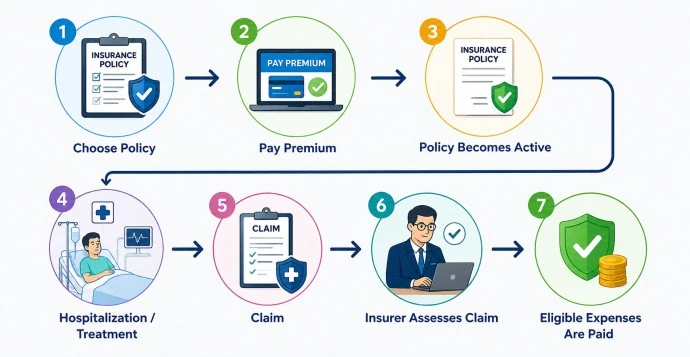
First, you choose a suitable health insurance policy and pay the required premium. Once the policy becomes active, you can use the coverage when hospitalization or treatment is needed. After receiving treatment, you file a claim, which the insurer reviews. If the expenses are covered under the policy, the insurer pays the eligible amount.
Why is Health Insurance Important?
Health insurance is more than just a financial backup—it offers multiple benefits that protect both your health and your finances. Here’s why having a health insurance plan is important:
1) Financial Protection Against High Medical Costs - Medical treatments, surgeries, and hospital stays can be expensive. Health insurance ensures that you don’t have to pay large amounts out of your pocket, reducing financial stress during emergencies.
2) Comprehensive Coverage for Medical Needs - Health insurance offers various features that cover almost every aspect of medical treatment:
1 .Cashless Treatment:- Enjoy cashless treatment at network hospitals, with all expenses handled by your insurance provider. The insurer settles the bills directly with the hospital.
2 .Room Rent:- Covers hospital room charges depending on the plan type and premium chosen.
3 .Pre- and Post-Hospitalization Expenses:- Covers medical costs incurred before and after hospitalization for a specified number of days.
4 .Ambulance Expenses:- Covers the cost of ambulance services for emergency transportation.
5 .No Claim Bonus:- Increase your coverage over time with a no-claim bonus for every claim-free year.
6 .Regular Health Check-ups:- Many plans offer free health check-ups after a few claim-free years to help you monitor your health.
7 .Organ Donor Expenses:- Covers medical costs related to organ transplant procedures.
8 .Domiciliary Treatment:- Provides coverage for treatment received at home under a doctor’s supervision when hospitalization is not possible.
3) Access to Better Healthcare - With insurance, you can afford quality healthcare, timely consultations, and advanced treatments without worrying about the cost.
4) Family Protection - Family floater plans or comprehensive policies cover your spouse, children, and sometimes parents, ensuring your loved ones are financially protected against health emergencies.
5) Tax Benefits - Premiums paid for health insurance are eligible for tax deductions under applicable laws, making it a financially smart choice.
6) Peace of Mind - Having health insurance allows you to focus on recovery rather than worrying about bills, giving you confidence that your health and finances are protected.
What Does Health Insurance Cover?
Health insurance helps you pay for medical expenses when you need treatment. It usually covers costs such as hospitalization, surgeries, doctor’s fees, medicines, diagnostic tests, daycare treatments, and pre- and post-hospitalization expenses. Some policies also cover modern treatments and provide cashless treatment at network hospitals.
However, every policy has its own coverage and exclusions. So, before buying health insurance, always check what is covered, what is not covered, waiting periods, and any limits on your coverage.
What are the Factors That Affect Health Insurance Premium?
The premium is the amount you pay to your insurance company for health coverage. Several factors influence how much you will pay for a health insurance policy. Understanding these factors can help you choose the right plan that balances coverage and cost.
1) Age of the Insured - Your age plays a major role in determining premiums. Younger individuals usually pay lower premiums, while older adults or senior citizens may have higher premiums due to increased health risks.
2) Sum Insured - The sum insured is the maximum amount your policy covers during a claim. Higher coverage amounts generally lead to higher premiums, as the insurer takes on more financial risk.
3) Health Condition and Medical History - Pre-existing conditions or a history of chronic illnesses can increase your premium. Insurers assess the likelihood of medical claims based on your health profile.
4) Lifestyle and Occupation - High-risk occupations or lifestyle choices like smoking, drinking, or extreme sports may lead to higher premiums because of the increased probability of health issues or accidents.
5) Type of Plan - Different plans have different costs:
- Health insurance for just one person usually comes with a lower premium than family plans.
- Comprehensive plans with add-ons like critical illness or maternity coverage may increase the premium.
6) Claim History - If you have made frequent claims in the past, insurers may charge a higher premium. Conversely, some insurers offer discounts for a claim-free history.
7) Location - The cost of medical treatment in your city or region can affect premiums. In metropolitan areas where healthcare costs are higher, premiums may be slightly higher compared to smaller towns.
8) Policy Add-Ons and Riders - Optional add-ons like critical illness cover, maternity benefits, or hospital cash benefit increase the overall premium but provide extra protection.
How to Choose the Right Health Insurance Plan?
Choosing the right health insurance plan is not as easy as one may think, and a lower premium may not be the best option. The factors that one should consider when selecting a health insurance policy include: age and family size, the sum that one intends to insure, availability of the preferred hospitals in the list of networks of the insurance company, waiting periods, co-payment, room rent limits, sub-limits and pre-existing disease coverage.
Prior to buying any insurance plan, it is important to understand the claiming process, exclusions and to check if the premium is affordable. In addition, one should also consider the renewal terms to understand how the process will take place.

5.0
Need advice from experts?
Too many plans, too much confusion? We'll simplify everything for you, completely FREE. 100% honest, 100% spam-free.
Our Faqs
Get This Asked Answers
Common Questions
No FAQs available for this page.

 Talk to an Advisor
 Talk to an Advisor